One Envelope, Five Accents: The Hidden Economics of Mailpack Variants
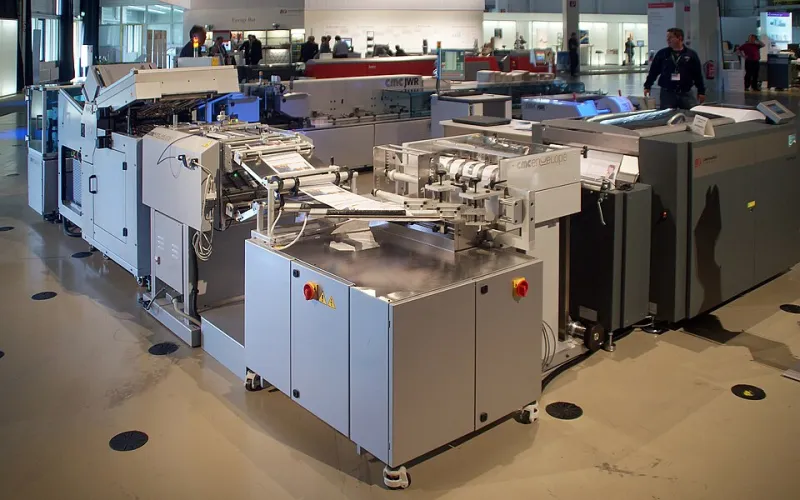
Photo: Smokeonthewater, CC BY-SA 4.0, via Wikimedia Commons
Personalisation has become a default ambition in UK direct mail. The logic is seductive: a message tailored to a recipient should outperform a generic one. That may be true at the level of the individual pack. At the level of the campaign, however, personalisation is rarely free. Every additional version introduces a series of small, compounding obligations in prepress, print, data preparation, inventory and fulfilment. The commercial question is not whether personalisation can work. It is whether the variant structure chosen will earn back the cost it creates.
The variant is a production instruction
In a print campaign, a version is not merely a different headline or image. It is a separate production instruction that runs through the whole supply chain. The designer sees a new layout. The printer sees a new make-ready, possibly a new plate set, a new colour check and a new waste allowance. The data team sees a new selection rule, a new suppression pass and a new quality-assurance check. The fulfilment house sees another stock-keeping unit to store, pick, match and reconcile.
That matters because direct mail economics are usually calculated at the level of cost per thousand and response rate. Versioning changes both sides of that equation. It raises cost per thousand for every version that falls below an efficient print run, and it raises the response threshold that the campaign must clear. A modest creative choice—five regional headlines, say—can therefore become a material commercial decision.
Where the costs accumulate
Plate changes and make-ready
Litho printing carries fixed set-up costs for each version: plates, ink setting, registration, colour approval and initial waste. Digital print removes some of that burden, but not all of it. Digital presses still require job set-up, file checking and version control, and click charges may make short version runs expensive. The common mistake is to compare only the unit print price of a single version with the unit print price of a versioned run. The relevant comparison is total cost including make-ready, waste and administration.
Minimum print runs
Printers price work in bands. A version that requires only 8,000 packs may be priced as if it were 10,000, or may attract a minimum charge that erodes the apparent benefit of segmentation. When a campaign is split into five variants, each variant may sit below the efficient band. The result is over-production, unused stock or a higher unit cost. In some cases all three occur at once.
Segmented data preparation
A single mailpack needs one data build: selection, dedupe, suppression, address hygiene, sortation and final file QA. A versioned campaign needs those steps repeated or, at minimum, checked separately for each segment. If the versions use different offers, eligibility rules or suppression logic, the data work multiplies. That work is often invisible in the creative budget but visible in the invoice.
Inventory and version control
Multiple versions create multiple stocks: envelopes, inserts, reply devices, outer labels and any personalised components. Storage, picking and reconciliation become more complex. The risk of mixing versions—sending the Scottish offer to a London postcode, or the existing-customer pack to a prospect—rises with every additional variant. Fulfilment errors are expensive not only to correct but also to measure, because they contaminate response data.
Fulfilment risk
Version control is a fulfilment discipline. A single pack can be checked against one specification. Five packs require five specifications, five sign-offs and a picking process that keeps them separate. If the campaign is time-bound, as most direct mail is, a versioning error can delay the whole mailing rather than just one segment. That operational risk belongs in the business case.
A worked comparison
Consider a hypothetical UK campaign of 50,000 packs. A single version might cost £10,000 in print, £400 in make-ready, £1,500 in data preparation, £4,000 in fulfilment and £500 in inventory administration: £16,400 before postage. Five versions of 10,000 each might cost £13,500 in print, £2,000 in make-ready, £3,000 in data preparation, £5,000 in fulfilment and £1,200 in inventory administration: £24,700. The difference is £8,300.
Assume postage is unchanged and the campaign generates a gross margin of £40 per response. The versioned campaign must produce an additional 208 responses simply to break even on the extra cost. On a 50,000-piece mailing, that is the difference between a 1.0% response rate and a 1.42% response rate—a 42% relative uplift. That may be achievable, but it should be evidenced rather than assumed. If the variants differ only in tone of voice, the case is weak. If they reflect genuinely different offers for materially different segments, the case may be strong.
A practical decision rule
Use one well-made mailpack unless the variant structure can clear three tests. First, the segments must be commercially distinct: different needs, different eligibility or different economics. Second, there must be evidence—from a prior test, a holdout or credible customer data—that the variant will lift response or margin. Third, the forecast incremental gross margin must exceed the incremental versioning cost by a comfortable margin, ideally at least 1.5 times, to allow for error.
If those tests are not met, personalise inside the pack rather than across it. A single envelope with a digitally printed name, a relevant insert or a variable message can capture some of the benefit without multiplying plates, stock lines and data builds. The aim is not to avoid personalisation. It is to make sure that every version earns its place in the production schedule.
In UK direct mail, the most expensive word in the brief is often 'versions'. The discipline is to ask what each one adds, what it costs and how the campaign will know whether it worked. A single, well-made mailpack is not a failure of ambition. It is often the more commercial choice.