Paying Passengers: Which Inserts Earn Their Seat in a UK Mailpack
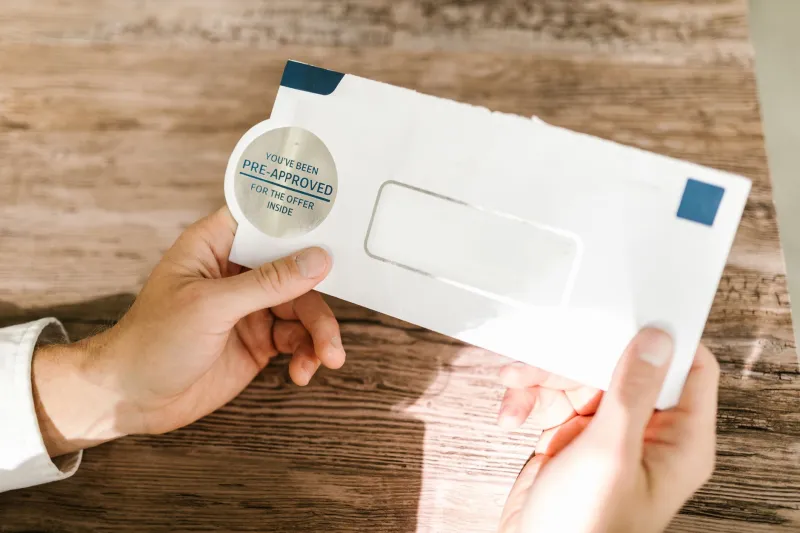
The main letter receives the scrutiny. It is drafted, tested, redesigned and signed off with care. The pieces that follow it into the envelope often arrive by habit: a leaflet because the last campaign had one, a partner insert because the revenue is welcome, an onsert because the print schedule allowed it. In UK direct mail, however, every additional item consumes weight, postage, production budget and, most importantly, the reader’s finite attention. Treating the insert stack as an afterthought is a commercial error. The envelope is a shared economy, and each piece inside it should be able to justify its fare.
The envelope as a shared economy
A mailpack is not a neutral container. It is a sequence of impressions, and the order in which those impressions land shapes response. The main letter is the anchor tenant: it carries the primary proposition, the call to action and the brand’s voice. Inserts and onserts are sub-tenants. They can support the anchor by reinforcing a single message, or they can compete with it by introducing new offers, new deadlines and new visual hierarchies. Partner inserts add a third dynamic: they bring revenue into the campaign but may divert attention away from the host’s objective.
The practical question for UK business leaders in 2026 is not whether inserts are old-fashioned. It is whether each piece earns its place in the envelope on commercial grounds. That requires a framework rather than a preference.
Four tests before anything goes in
A disciplined insert audit begins with four tests, applied to every proposed piece.
1. The attention test. Does the piece have a realistic chance of being read? This is not a matter of creative liking. It is a matter of physical hierarchy. A loose insert that falls out when the envelope is opened may be seen before the letter; an onsert printed on the reverse of the reply device may be seen only after the main decision has been made. Position, size and contrast determine whether the piece enters the reader’s field of view at the right moment.
2. The incremental response test. Would the main letter perform worse without this piece? That is the only question that matters. An insert may generate its own responses, but if those responses would have occurred anyway, the piece has not added value. It has added cost. Proving incremental effect requires a control group that receives the mailpack without the insert, and a test group that receives it with. Anything less is an assertion.
3. The cost-per-response test. The fully loaded cost of an insert includes print, any additional weight-based postage, fulfilment and the management time required to oversee it. Dividing that cost by the incremental responses it generates gives a cost per response that can be compared with the host campaign’s economics. An insert that looks cheap per thousand can be expensive per incremental order.
4. The brand and compliance test. Does the piece fit the host brand’s tone and regulatory obligations? Partner inserts raise specific questions about data protection, environmental claims and customer consent. A partner offer that feels incongruous or poorly disclosed can damage the host’s response even if the partner pays handsomely for the space.
The weight-and-postage trap
UK postage is priced in bands, and the marginal cost of adding a few grams is rarely linear. A single lightweight insert may appear to cost pennies per unit, but at volume the postage increment can be substantial. More importantly, the incremental postage is only one part of the equation. The insert also consumes print budget that could have been spent on the main letter, and it consumes attention that could have been spent on the primary call to action.
Partner inserts are often justified as a postage subsidy. That framing is commercially useful only if the revenue exceeds the combined effect of the postage increment and any dilution of response. A partner insert that pays £X per thousand but reduces the host response rate by Y per cent may be a net loss. The arithmetic is not difficult, but it is frequently skipped. Before accepting partner revenue, model the break-even dilution: how much can the host response rate fall before the partner fee is wiped out?
Sequencing and creative hierarchy
The order in which pieces are encountered matters as much as their content. When a recipient opens an envelope, the first item they see sets the frame for everything that follows. If that item is a partner insert with a competing offer, the main letter begins at a disadvantage. If it is an onsert that reinforces the primary proposition, the main letter gains momentum.
Creative hierarchy should be deliberate. One piece should lead. The main letter should normally carry the primary call to action, with inserts playing a supporting role. Two pieces with equal visual weight and different calls to action create friction. The reader is forced to choose, and many will choose neither. Sequencing also affects the reply device: if the reply mechanism is buried beneath a stack of loose inserts, response can suffer. The physical order should mirror the intended decision journey.
Partner inserts: subsidy or tax?
Partner inserts can be a legitimate source of revenue and a useful way to share postage costs. They can also be a tax on the host campaign’s performance. The distinction lies in relevance and measurement. A partner offer that is genuinely useful to the recipient can enhance the mailpack’s perceived value. A partner offer that is irrelevant or poorly presented can undermine trust in the host.
Measurement is the control. Partner inserts should be tested with and without the host’s primary offer, not simply counted as revenue. The host should also consider whether the partner’s data practices and creative comply with UK GDPR and the Privacy and Electronic Communications Regulations. A partner’s poor practice can become the host’s reputational problem.
Measuring incremental yield
The measurement architecture for inserts is not exotic, but it requires discipline. Establish a control group that receives the mailpack without the insert under review. Establish a test group that receives it with the insert. Hold everything else constant: the main letter, the offer, the timing, the list. Measure response rate, conversion rate, cost per acquisition and revenue per thousand. Where possible, use unique codes or URLs to attribute responses to the correct variant.
Incremental yield is the difference between the test and control groups, expressed in commercial terms. An insert that generates a high response rate but no incremental lift against control has not earned its place. An insert that generates a modest response but a strong incremental lift may be valuable. The metric that matters is the marginal effect on the host campaign’s economics, not the insert’s standalone performance.
A decision rule for 2026
For each proposed insert, score it against the four tests. If it fails the incremental response test, cut it. If it fails the cost-per-response test, redesign it or cut it. If it fails the brand and compliance test, do not print it. Partner inserts should clear an additional hurdle: their revenue must exceed the expected dilution of host response, with a margin for error.
The main letter remains the anchor tenant. Inserts are passengers, and passengers should pay their fare. In a year when postage and print costs continue to demand justification, the insert stack is not a place for sentiment. It is a place for arithmetic.