Built to Be Defended: How UK Marketers Should Size and Govern Direct Mail Tests

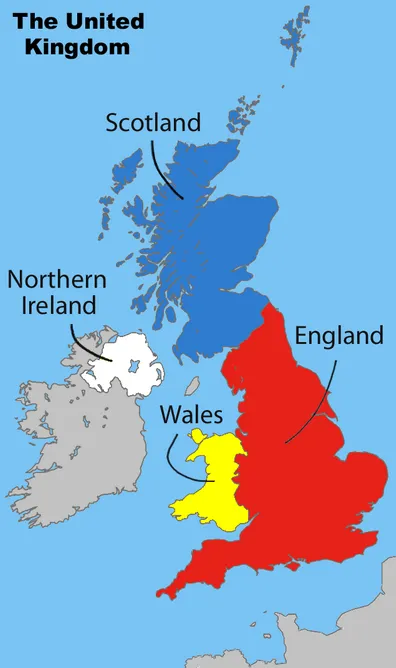
Photo: Daniel Coleman, Public domain, via Wikimedia Commons
A direct mail test that cannot survive a board review is an expensive rehearsal. The problem is rarely the mail pack itself. It is usually the design: cells too small to detect a realistic lift, a control group treated as an afterthought, or a result presented without a pre-agreed decision rule. In 2026, with budgets tighter and scrutiny higher, UK marketers need tests that are built to be defended.
Begin with the decision the board will make
A test should start with the decision it is meant to inform. Will the business roll out the new envelope, change the offer, buy a larger list, or stop the channel? Who owns that decision, and what evidence will they accept?
Write the decision rule before the test begins. For example: roll out if the test beats control by at least 15% relative on the primary metric at 95% confidence and cost per acquisition stays within £X. If the result is positive but not significant, extend the test by one wave. If the result is negative, stop and document the learning. That single document prevents the most common boardroom failure: choosing the interpretation after seeing the data.
Size cells for the answer you need, not the budget you have
A few hundred records per cell may keep a spreadsheet tidy, but it rarely produces a board-grade answer. Direct mail response rates are low, often between 1% and 5% in B2B and charitable acquisition. At those levels, small cells generate too few responses to distinguish a real lift from noise.
As a practical starting point, calculate the number of expected responses per cell, not just the number of records. If the baseline response rate is 1.5%, a cell of 1,000 records produces about 15 responses. That is not enough to support a rollout decision on a modest lift. A cell of 5,000 records produces about 75 responses, which is more defensible, though still limited for small effects.
If the budget cannot fund cells of that size, test a bigger change. A new offer, a different outer envelope or a revised call to action is more likely to produce a measurable effect than a subtle colour change. Alternatively, run the test across two waves and pool the results, provided the audience and seasonality are comparable.
Protect the control and split it deliberately
A control group is not a courtesy. It is the benchmark that makes the test legible. For a two-cell test, aim for a 50/50 split. If budget forces a smaller control, do not let it fall below 30% of the total, and state the trade-off in the test brief.
For multi-cell tests, keep the control large enough to measure. A 40/40/20 split may be acceptable for early exploration, but the control should not become a rounding error. If the control is too small, the confidence interval around the lift will be too wide to support a decision.
Randomise at the right level. For B2B, that may mean account level rather than contact level, so that two contacts at the same firm do not receive different treatments. For charitable mailings, check that donor segments are represented in each cell. A random split that accidentally concentrates high-value donors in one cell is not a clean test.
Set significance thresholds before you look
Use 95% confidence as the default for a rollout decision. A 90% threshold may be acceptable for exploratory work, but it should be labelled as such and should not trigger a full rollout on its own. Report confidence intervals, not just the point estimate. A test that shows a 20% lift with a wide interval may be less persuasive than a test that shows a 10% lift with a narrow one.
Avoid peeking at results and stopping when the numbers look favourable. That practice inflates false positives. If the test needs an interim read for operational reasons, pre-agree what action is permitted at that point, and keep the final decision rule intact.
Account for seasonality and UK mailing patterns
UK direct mail response can move with the calendar: summer holidays, the December rush, quarter-end budget cycles and charity appeal seasons all affect behaviour. A test run in an atypical week may not generalise to a rollout.
Either run the test in a representative period or replicate it across two waves. Record the mailing dates, the data source, the offer deadline and any external factors that could affect response. The board should see the test in context, not as a standalone percentage.
A pre-agreed decision matrix
| Test result | Board-approved action |
|---|---|
| Primary metric clears the minimum detectable effect at 95% confidence and guardrails are met | Roll out to the agreed audience |
| Directionally positive but confidence is below 95% | Extend by one wave or re-test; do not roll out |
| No lift or negative lift | Stop; document the learning and close the loop |
| Response improves but cost per acquisition or complaint rate breaches guardrails | Stop or modify regardless of response |
The matrix should be signed off by marketing and finance before the mailing. That does not remove judgement, but it makes judgement accountable.
A board-ready test brief in seven lines
- Hypothesis: what change are we testing and why should it work?
- Primary metric: response rate, cost per response or contribution per pack?
- Cells: sizes, randomisation method and control split.
- Duration and seasonality: when will it mail and is that period representative?
- Significance: what threshold will trigger a rollout decision?
- Decision rule: what happens if the result is positive, flat or negative?
- Owner and budget: who signs off, and what does the test cost?
A test is not credible because it is large. It is credible because it is designed to answer a specific question, sized to detect a realistic effect, and governed by rules agreed before the result is known. That is what turns a direct mail experiment into evidence a board can act on.