The Price of a Reply: Auditing Paid Response Channels in UK Direct Mail
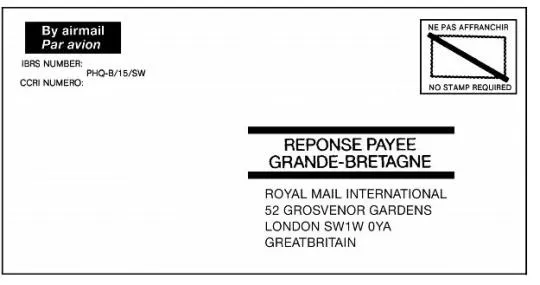
Photo: USPS, Public domain, via Wikimedia Commons
Reply devices are often added at the end of a mail pack because they feel like good practice. In 2026, with print, postage and data costs under renewed scrutiny, that instinct needs a financial test. A Freepost envelope is not free to the sender: it is a paid reply channel, and it should earn its place in the pack.
The reply device is a cost line, not a courtesy
A Business Reply envelope or Freepost return adds print, envelope, handling and a Royal Mail return surcharge. Those costs apply to every pack mailed, not just to the minority who reply. A QR code looks cheaper, but it still requires design, landing-page build, hosting, tracking and analytics. A phone line carries telephony and staff costs. A printed URL carries almost no direct cost, but it introduces friction and attribution gaps.
The correct question is not whether a reply device is useful. It is whether the expected lift in response, multiplied by the contribution per response, exceeds the added cost across the whole mailing. That is a unit-economics question, and it belongs in the campaign plan rather than the post-campaign review.
A break-even formula finance will recognise
Use a simple break-even calculation before adding any paid reply channel:
Required response lift (percentage points) = added cost per pack ÷ contribution per response
If a Freepost envelope adds 65p per pack and the average contribution per response is £250, the required lift is 0.26 percentage points. On a 1.5% baseline response rate, the mailing needs to reach 1.76% just to cover the envelope. If the expected lift is 0.5 percentage points, the device is likely to pay. If the expected lift is 0.1 percentage points, it is likely to be an expensive habit.
For charitable mailings, use lifetime contribution rather than first-gift value, but show both figures to the board. A donor who gives £30 in year one but £90 over three years changes the break-even calculation materially. That does not remove the cash-flow pressure of an acquisition mailing, but it prevents a false rejection of a channel that is sensible over the donor lifecycle.
What each reply channel actually costs
| Reply device | Main cost driver | Best fit | Watch-out |
|---|---|---|---|
| Freepost or Business Reply envelope | Print, envelope, return surcharge, handling | Older donors, high-value B2B, offline reply preferences | Cost applies to every pack, not only replies |
| QR code and landing page | Design, hosting, tracking, analytics | Digital-ready audiences, event or sample requests | Requires smartphone and intent; tracking can fragment |
| Phone line | Telephony, staff time, training | Complex B2B offers, high-value accounts | Cost per call can dwarf postage on low-value packs |
| Printed URL | Negligible direct cost | Low-cost tests, simple response | Typing friction and weaker attribution |
The table is deliberately blunt. The more expensive the reply device, the more evidence you need that it changes behaviour rather than simply recording it.
B2B mailings: the maths of a paid return path
Consider a UK B2B services firm mailing 5,000 prospective accounts. The pack costs £1.10 before any reply device. Average contribution per response is £220. Adding a Business Reply envelope adds 70p per pack, or £3,500 across the mailing.
The break-even lift is 0.70 ÷ 220 = 0.32 percentage points. If the baseline response rate is 1.4%, the mailing needs to reach 1.72% to cover the envelope. At 1.9%, the incremental 0.5 percentage points produce 25 extra responses and £5,500 in contribution, leaving a net gain of £2,000 after the envelope cost. At 1.6%, the device has not paid.
That is the discipline the board should see. It is not enough to report that the Freepost pack beat the non-Freepost pack. The lift must be large enough to clear the added cost, and the response quality must be comparable. A higher response rate made up of unqualified enquiries can destroy the business case.
Charitable mailings: use lifetime value, not first gift
A charity mailing 20,000 donor prospects may find that a Freepost envelope adds 60p per pack. If first-year contribution per donor is £30, the required lift is 2.0 percentage points. On a 1.8% baseline, the mailing would need to reach 3.8% just to break even in year one. That is a demanding hurdle.
If lifetime contribution is £90, the required lift falls to 0.67 percentage points. The same envelope now needs the mailing to reach 2.47%, which may be realistic for a warm prospect list. The channel decision changes because the economics change. Charities should present both the year-one and lifetime cases, and they should state clearly which one governs the rollout decision.
The audit questions to ask before you add a reply device
- What is the added cost per pack, including print, handling and return surcharge?
- What contribution per response are we using, and is it gross or net of fulfilment?
- What response lift do we realistically expect, and what evidence supports that expectation?
- Does the required lift fall below that expectation with a margin for error?
- Will the reply device improve response quality, or only response volume?
- Can we test the device on a representative cell before rolling it out?
A paid reply channel is not a courtesy. It is an investment in response, and it should be audited like any other. Run the break-even calculation first. If the required lift is larger than the lift you can credibly expect, the envelope belongs in the bin, not in the pack.