Warm Leads, Cold Lines: A Teardown of the 72 Hours After a Coupon Comes Back

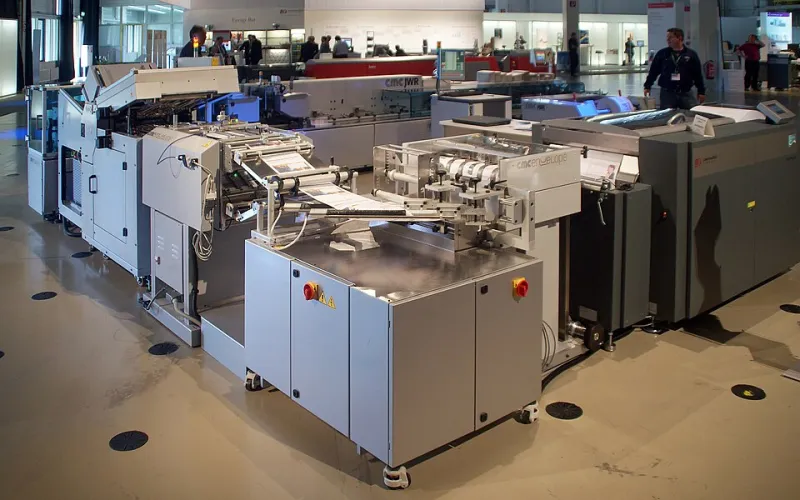
Photo: Heba Essa, CC BY-SA 4.0, via Wikimedia Commons
A direct mail campaign is usually judged on two numbers: how many went out and how many came back. Everything after the reply lands is treated as operations — someone else's budget line, someone else's problem. This teardown argues that the reply is not the end of the campaign. It is the point at which the campaign's economics are actually decided, and it is where most of the avoidable loss occurs.
Setting the exercise
The subject was a mid-market UK mailer posting roughly 60,000 pieces to a prospect list, with a coupon, a freephone number and a QR code as reply routes. Reported response at the time of the exercise was 1.2 per cent, around 720 replies, spread roughly 45 per cent phone, 35 per cent QR, 20 per cent posted coupon. Conversion from response to sale was quoted internally at 15 per cent.
We built six synthetic prospect identities — plausible names, addresses and postcodes, all matched to the mailing list — and replied through each route at different times of day and week. Then we followed each one for 72 hours, recording answer times, script content, data captured and what arrived in the post or the inbox.
Gate one: the phone line
Three calls were placed to the freephone number. One at 10:15 on a Tuesday, one at 13:40 on a Thursday, one at 18:20 on a Wednesday.
Average time to answer: one minute and forty-seven seconds. The Tuesday call was answered in 22 seconds by an agent who could not locate the campaign reference and offered a generic brochure. The Thursday call waited two minutes and ten seconds before being dropped into a voicemail box that made no promise of a callback. It never received one. The Wednesday call, placed after six in the evening, went straight to the same voicemail.
Two findings matter more than the timings. First, no agent asked how the prospect had heard about the business, and none had a field in which to record it. Second, the offer quoted on the phone did not match the offer on the mailer: the creative promised a specific incentive, the agent described a different, weaker one. A warm prospect was asked to accept less than they had been promised, with no explanation.
Gate two: the QR landing page
The QR code resolved to the company's homepage, not to a campaign-specific page. On a mobile device the homepage took just over four seconds to render, and the mailing's offer was three scrolls down. There was no pre-populated field, no visible campaign code and no cookie or parameter that would later identify the visitor as having arrived from print.
The scan was completed, an enquiry form was submitted, and the confirmation email arrived within a minute — the strongest link in the chain by a distance. But nothing in the chain told the business that this enquiry came from a 60,000-piece mailing rather than from search or social. In an attribution sense, the QR route was invisible.
Gate three: the fulfilment house
The posted coupon was the slowest route and the least observed. It arrived at the fulfilment address, was keyed, and triggered a welcome pack that landed nine working days after posting. The pack was accurate and well produced. It contained no reference to the original mailing and no unique reference the recipient could quote when calling in.
This is the classic gap in UK response handling: the letter is dispatched, the record is created, and the two are never reconciled. The fulfilment partner is measured on turnaround and accuracy of its own process, both of which were fine. Nobody is measured on whether the prospect still remembers what prompted them to reply.
Gate four: the CRM
Between the three routes, we generated four records across two systems. One arrived with a campaign code, two arrived with no source at all, and one existed twice under slightly different name formats with no de-duplication rule applied.
When we asked how the 1.2 per cent response rate had been calculated, the answer was a manual reconciliation between a fulfilment spreadsheet and a call log. That is not a measurement system; it is a monthly exercise in reconstruction. Any channel-level analysis built on it is guesswork dressed as data.
What the leakage is worth
Take the exercise at face value. If roughly one in five replies is lost to unanswered calls, mismatched offers, unattributable web enquiries and slow fulfilment, that is about 140 of 720 prospects. At the quoted 15 per cent conversion and a modest average first-order value of £420, the lost opportunity is in the region of £8,600 of revenue per mailing — before any consideration of lifetime value, referral or the media cost of replacing those prospects.
Set that against what would have fixed it. A campaign-specific landing page, a call-routing rule with a four-hour callback standard, a single campaign code carried through every route, and a de-duplication rule at the point of entry. None of that is expensive. All of it requires someone to own the reply, rather than merely process it.
Treat response handling as a briefed channel
The lesson of this teardown is structural. Creative is briefed with care, print is specified, data is audited. The reply — the moment the money is spent and the return begins — is left to whoever happens to be on shift.
A reply-handling brief should sit alongside the creative brief. It should state the answer-time standard for each channel, the exact wording of the offer as agents must describe it, the questions that must be asked to capture source, the turnaround commitment from the fulfilment partner, and the single identifier that follows a prospect from envelope to CRM record. It should name an owner.
It should also carry a budget line. Response handling is a cost of the channel, not an overhead. A mailer that spends £50,000 on print and postage and nothing on the four days after the reply arrives has funded the half of the campaign that is easiest to measure and least likely to fail.
Audit it before you scale it
The mystery-shop method described here is reproducible for a few hundred pounds and a fortnight of patience. Six identities, three channels, a stopwatch and a spreadsheet will tell you more about your direct mail's true conversion rate than another round of creative testing. Run it once on a live campaign and you will find at least one broken handover. Fix that before you buy the next 60,000 envelopes.