The Sortation Trade-Off: Why the Cheapest Postage Band Rarely Wins on Cost Per Thousand

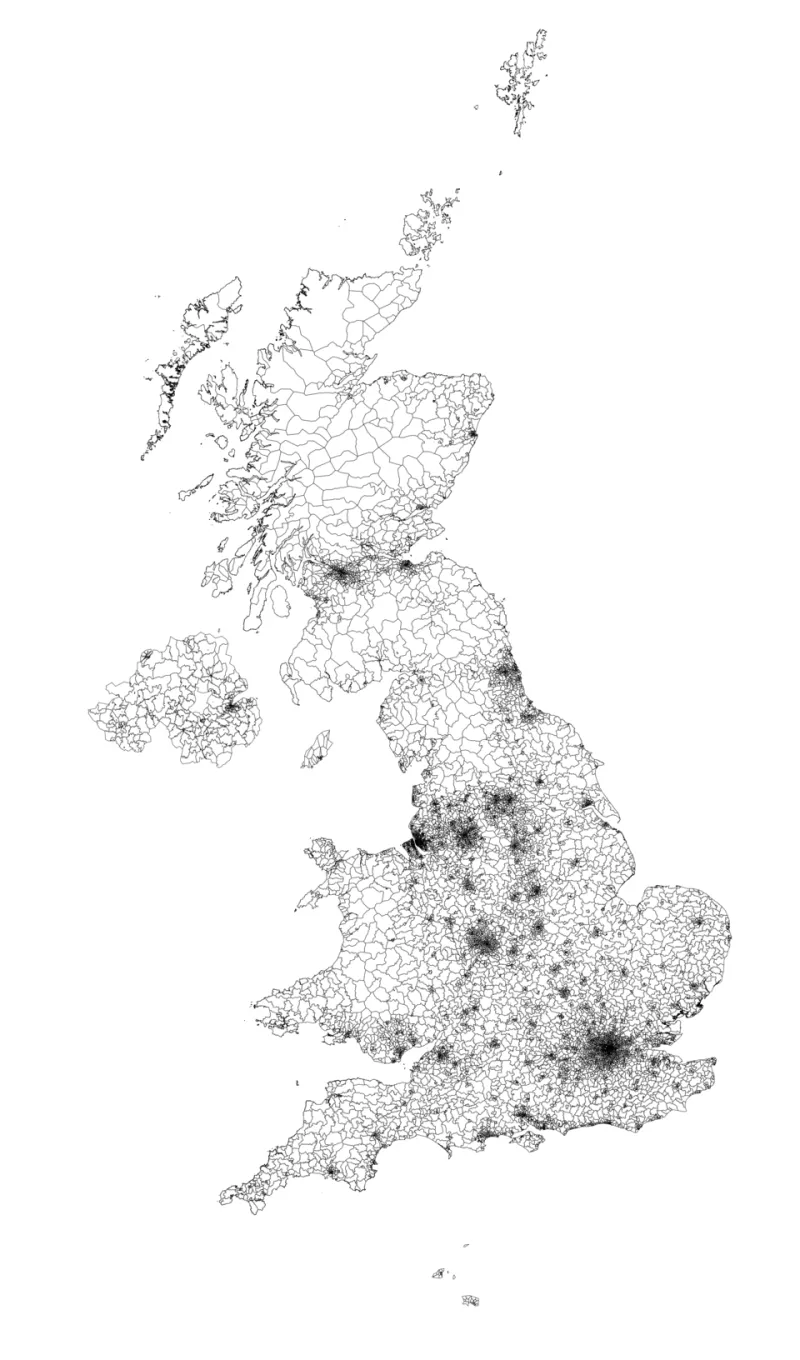
Photo: Nigel Chadwick, CC BY-SA 2.0, via Wikimedia Commons
Postage is usually the largest single line in a UK mailshot budget, which is why so many planning meetings begin and end with the same question: can we get a cheaper rate? The answer is almost always yes. The better question is whether the saving survives contact with the rest of the campaign.
Sorted, part-sorted and unsorted mail are not three prices for the same job. They are three different operating models, each demanding a different standard of address data, a different production sequence and a different level of tolerance for change. Treat the choice as a procurement decision and you will usually buy the wrong one.
Three classifications, three operating models
Unsorted. The file goes to print with minimal sorting obligations. Addresses must still be legible and complete, but the mailer is not committed to barcode carriage, PAF matching or delivery-office sequencing. This is the most forgiving option and the most expensive per item.
Part-sorted. Every item carries a machine-readable barcode and the address file has been matched against PAF and de-duplicated. The mailer takes on data preparation and a portion of the sortation burden — typically grouping to a coarser geographical level than walk order.
Fully sorted. The file is sequenced to the level the rate card requires, typically down to delivery office selection or walk order, with an accuracy standard attached to every record. Errors are not merely administrative: a mis-sorted selection can invalidate the rate on the affected portion of the mailing, or on the whole job depending on how it has been presented.
What each tier asks of you before the envelope exists
The postage discount is a payment for work you have removed from the network. That work does not disappear; it relocates to your data bureau, your lettershop and your production schedule.
Part-sorted and sorted mailings need a clean PAF match rate, suppression against the usual files, and enough lead time for a bureau to run address hygiene, apply barcodes and sequence the file. They need copy frozen earlier than an unsorted job, because the sortation plan depends on versioning being settled. Versioning that arrives late — a regional variant, a store-specific insert, a last-minute offer change — can blow a selection apart and push items back into a higher-priced tier.
Fully sorted work also demands discipline on the tail of the file. A long list of low-count postcodes, or a handful of addresses that will not resolve, is where sortation gains leak away.
The 50,000-piece arithmetic
Take a straightforward UK acquisition mailing: 50,000 items, one creative, light personalisation, a four-week lead time. The rates below are illustrative round figures for the purpose of the comparison, not a quotation — check current rate cards before you commit — but the structure of the arithmetic is what matters.
| Unsorted | Part-sorted | Fully sorted | |
|---|---|---|---|
| Postage per item | 63p | 55p | 48p |
| Postage, 50,000 | £31,500 | £27,500 | £24,000 |
| Data preparation and hygiene | £2,000 | £3,500 | £6,500 |
| Sortation bureau and QA | — | £1,200 | £2,400 |
| Production and print | £18,000 | £18,000 | £18,800 |
| Total | £51,500 | £50,200 | £51,700 |
| Cost per thousand | £1,030 | £1,004 | £1,034 |
The fully sorted option buys the cheapest postage and delivers the most expensive cost per thousand. The saving of 15p an item against the unsorted rate is more than absorbed by £4,500 of additional data work, £2,400 of bureau fees and £800 of extra production for barcode verification and earlier copy freeze. Part-sorted wins here by a small margin, and it wins largely because it captures most of the postage benefit at roughly half the data cost.
Change the volume and the answer changes. At 150,000 items the postage differential is worth £22,500 against the unsorted rate, and sortation becomes comfortably the better buy. Somewhere between 60,000 and 100,000 pieces, depending on your file quality and your bureau's rates, the balance tips.
The deliverability offset nobody puts in the spreadsheet
There is a legitimate counter-argument, and it deserves its place in the model. Barcoded, PAF-matched, sequenced mail tends to reach the delivery point more reliably. Fewer items are returned, destroyed or misdelivered. If sortation cuts undeliverables from 2.5 per cent to 1 per cent on a 50,000-piece job, that is 750 items of print and postage no longer wasted — roughly £850 at these illustrative rates, plus the production cost of the spoiled units.
Add that to the model and the gap between part-sorted and unsorted narrows further, occasionally inverts. But note the order of causation: the deliverability benefit comes from cleaner data, not from the discount itself. You can buy the data discipline without buying the deepest sortation tier.
Sortation's hidden line item: time
The cost that rarely appears in the comparison is schedule rigidity. Sorted mailings need the file locked earlier, which shortens the window for late offers, price changes and stock decisions. In categories where the proposition moves weekly — travel, seasonal retail, energy — the flexibility of an unsorted or part-sorted job has real commercial value, even if it never shows on an invoice.
Ask your team one question: if the offer had to change five working days before the mailing, what would the sortation plan cost us? If the honest answer involves reprinting or losing the rate, price that risk in.
A decision rule by volume
- Under 20,000 items. Unsorted or part-sorted. The postage saving rarely covers the fixed cost of sortation, and small test cells benefit from the flexibility.
- 20,000 to 60,000. Part-sorted is usually the pragmatic default. Run the arithmetic both ways; the answer often turns on how good your address file already is.
- 60,000 to 150,000. Price all three. This is the band where full sortation starts to earn its keep, provided the file is clean enough to hit the accuracy standard.
- Above 150,000. Full sortation, with a downstream access contract and a regular review of the rate card. At this volume the postage differential is large enough to justify a standing data operation.
Whatever the band, the test is marginal: compare the postage saved per thousand against the data, bureau and production cost added per thousand. If the first number is not comfortably larger than the second, the deeper discount is not a discount.
Test the classification, not just the creative
Most UK mailers test the envelope and the offer, then adopt a postage tier on the strength of a rate card alone. A better use of a test budget is to split a live campaign across two classifications and measure total cost per response, not cost per item. That comparison — postage, data, production and response together — is the only one that tells you whether the cheapest band was ever the cheapest mailing.