The Green Claim Ledger: Stress-Testing Environmental Language Before a UK Mailpack Goes to Print
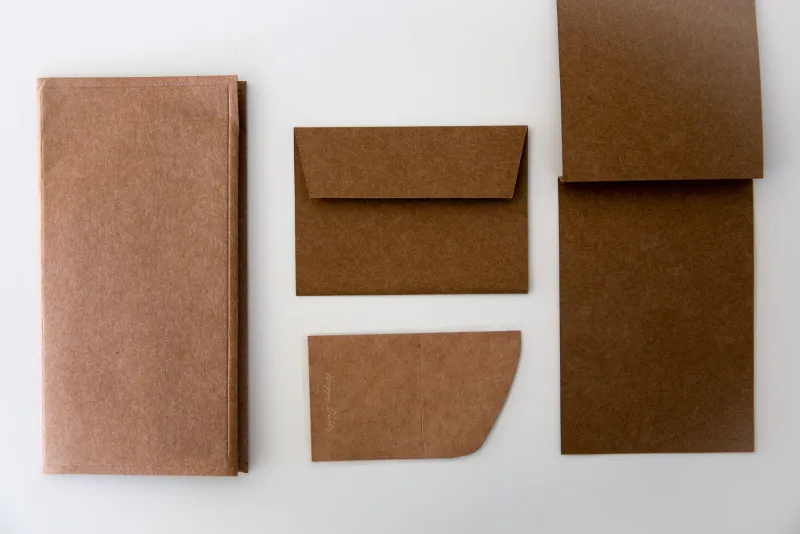
Environmental language has become standard furniture on UK mailpacks. A charity envelope announces recycled stock; a retail insert promises plastic-free packaging; a financial services letter refers to carbon-balanced postage. Each phrase is intended to reassure. Each also creates an evidential obligation. The commercial question for 2026 is not whether sustainability messaging belongs in direct mail. It is whether the specific words on the pack can survive scrutiny from a procurement team, a regulator or a recipient who knows the difference between recyclable and recycled.
Why the claim, not the intention, is the risk
Most UK marketers do not set out to mislead. They inherit copy from a supplier, reuse a line from a brand campaign or compress a complex supply-chain fact into four words on an envelope. The risk sits in that compression. The Advertising Standards Authority and the Competition and Markets Authority have both made clear that environmental claims must be specific, substantiated and not overstated. A mailpack is a physical artefact: the recipient can turn it over, inspect the window, read the small print and compare the claim with what arrives on the doormat. That tangibility raises the evidential bar.
A vague green claim can also damage response. Recipients increasingly discount unsupported language. In a crowded postbag, a precise claim can earn attention; a general one can read as decoration. The aim is not to remove environmental messaging but to make every line defensible.
Four claim families that need a ledger
Recycled paper
The common claim is 'printed on recycled paper'. The audit question is: what percentage, and what type? Pre-consumer mill waste, post-consumer waste and certified virgin fibre are not interchangeable. If the pack says '100% recycled', the evidence file should identify the stock specification, the mill declaration and any certification. If the envelope has a window, an adhesive or a laminated insert, those components may affect both the recycled content and the recyclability message. 'Recyclable' is a separate claim from 'recycled'.
Carbon-neutral or carbon-balanced postage
Postage is often the largest emissions line in a direct mail campaign. A claim that postage is carbon-neutral should state what has been measured, what has been offset and under which scheme. It should not imply that the entire campaign, including paper production and print, is carbon-neutral unless that wider boundary has been assessed. Offsetting is not the same as reduction. A defensible line might refer to a specific postal service and a verified offset programme; a risky line treats carbon neutrality as a mood.
Recyclability
'Fully recyclable' is one of the most fragile phrases in UK direct mail. Kerbside collection varies by local authority, and composite packs - paper envelope, plastic window, adhesive label, foil insert - may not be accepted together. The claim should say where and how the pack can be recycled, or use a qualified form such as 'recycle where kerbside paper collection exists'. If the pack includes a reply device, a magnet or a plastic card, the recyclability claim must account for it.
Plastic-free
Plastic-free language is usually about polywrap, windows, tape or inserts. The audit needs material specifications, not marketing descriptors. A compostable film is not automatically plastic-free in the eyes of every recipient or waste stream. A paper envelope with a plastic window is not plastic-free. If the claim refers only to the outer wrap, say so.
The five-line claim ledger
For each environmental statement on a mailpack, record five things:
- Exact wording and placement. Quote the claim as printed, including any asterisk or footnote.
- Evidence file. List the supplier declaration, certificate, test report or offset registry entry that supports it.
- Scope boundary. State what the claim covers: which component, which postal service, which geography, which year of supply.
- Owner and expiry. Name the person accountable and the date the evidence must be refreshed.
- Fallback wording. Agree the qualified version to use if evidence is incomplete or expires before print.
This ledger can sit alongside the print specification and the data handover. It turns a subjective copy debate into an evidence check.
A simple red-amber-green test
Green: specific, bounded and evidenced. Example: 'Outer envelope made from 100% post-consumer recycled paper; please recycle with kerbside paper collections.'
Amber: directionally true but needs qualification. Example: 'Carbon-balanced postage' without a named scheme, boundary or date.
Red: absolute or unsupported. Example: 'The most sustainable mailpack in the UK' or 'fully recyclable' with no reference to local facilities.
Amber claims are not automatically unusable. They become usable when the qualifier is added and the evidence is filed. Red claims should be rewritten or removed.
Cost and response arithmetic
The direct cost of a weak claim is easy to underestimate. A reprint is visible; the postage on a withdrawn pack, the missed response window and the internal time spent re-clearing copy are less so. For a campaign with tens of thousands of packs, a late claim review can cost more than the certification it was trying to describe.
The response effect is more nuanced. A credible environmental claim can support consideration among public sector buyers, charity donors and consumers who expect progress. But vague language rarely converts. The strongest position is usually a modest, verifiable statement that matches the pack and the organisation's wider reporting. Marketers should test whether the claim adds clarity or merely adds a green cue. If it is the latter, the space may be better used for the offer.
Before the next print run
Ask suppliers for the evidence at specification stage, not after artwork sign-off. Brief copywriters with the evidence file. Keep a named owner for each claim. Check that customer service teams can answer the obvious question: 'What does this actually mean?' And review claims against the current pack, not last season's template.
At GreatDMA, the practical test is simple: if a recipient, a procurement officer or a regulator asked for the proof behind the sentence, could the business produce it within the hour? If not, the claim is not ready for the doormat. In 2026, green ink should be treated as carefully as any other commercial promise - because that is what it is.